The Invention Of Nature
Warning: reading this book will make you want to quit your job and travel to South America to become a scientist-explorer. It may also make Alexander von Humboldt your favorite scientist.
The Invention Of Nature tells the tale of Alexander von Humboldt’s 5 year expedition through South America, where he climbed volcanoes and traveled through the rainforest, while constantly taking scientific measurements. The writing is great & very narrative heavy, making it feel almost like fiction. Andrea Wulf (the author) captures the feeling of Humboldt journeying through the Amazon extraordinarily well, echoing Humboldt’s own pioneering style.
After Humboldt’s expedition, he became the authority on South America in Europe, as essentially no other European scientists had explored the continent at this point (~1800). He wrote multiple books about his experiences, with a style of writing that combined the emotional experience of witnessing wild nature with detailed scientific observations. He created the genre of nature writing.
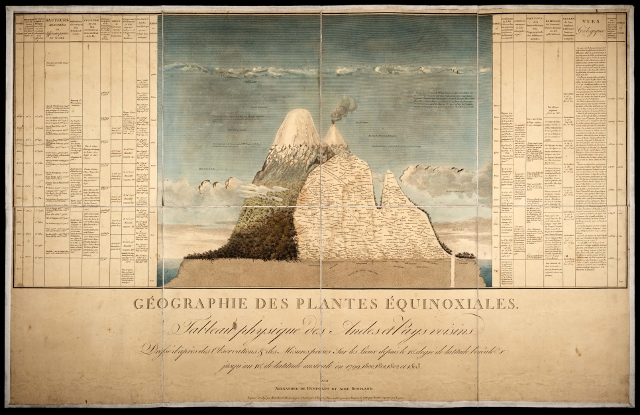
Perhaps his most pioneering idea was of Nature as one global interconnected system. This was a very non-consensus view at the time and is what his “invention” of Nature refers to. By comparing plant distributions on mountains & volcanoes in Europe to those in the Andes, he realized there were plant climate zones across the planet. He extended this thinking to all parts of Nature, and saw it as one giant interconnected web of relationships.
Both Humboldt’s idea of Nature as one interconnected system and his books directly inspired many very famous scientists, artists, and writers. He inspired Charles Darwin’s voyage on the Beagle, Thoreau’s view of nature, and many many others.